Plastic only
Wooden pallets are out. They rot, they swell, and they do not have the molded opening this 2x4 is sized for. If the listing is wood, keep scrolling.
Freestanding platform · Plastic pallets only
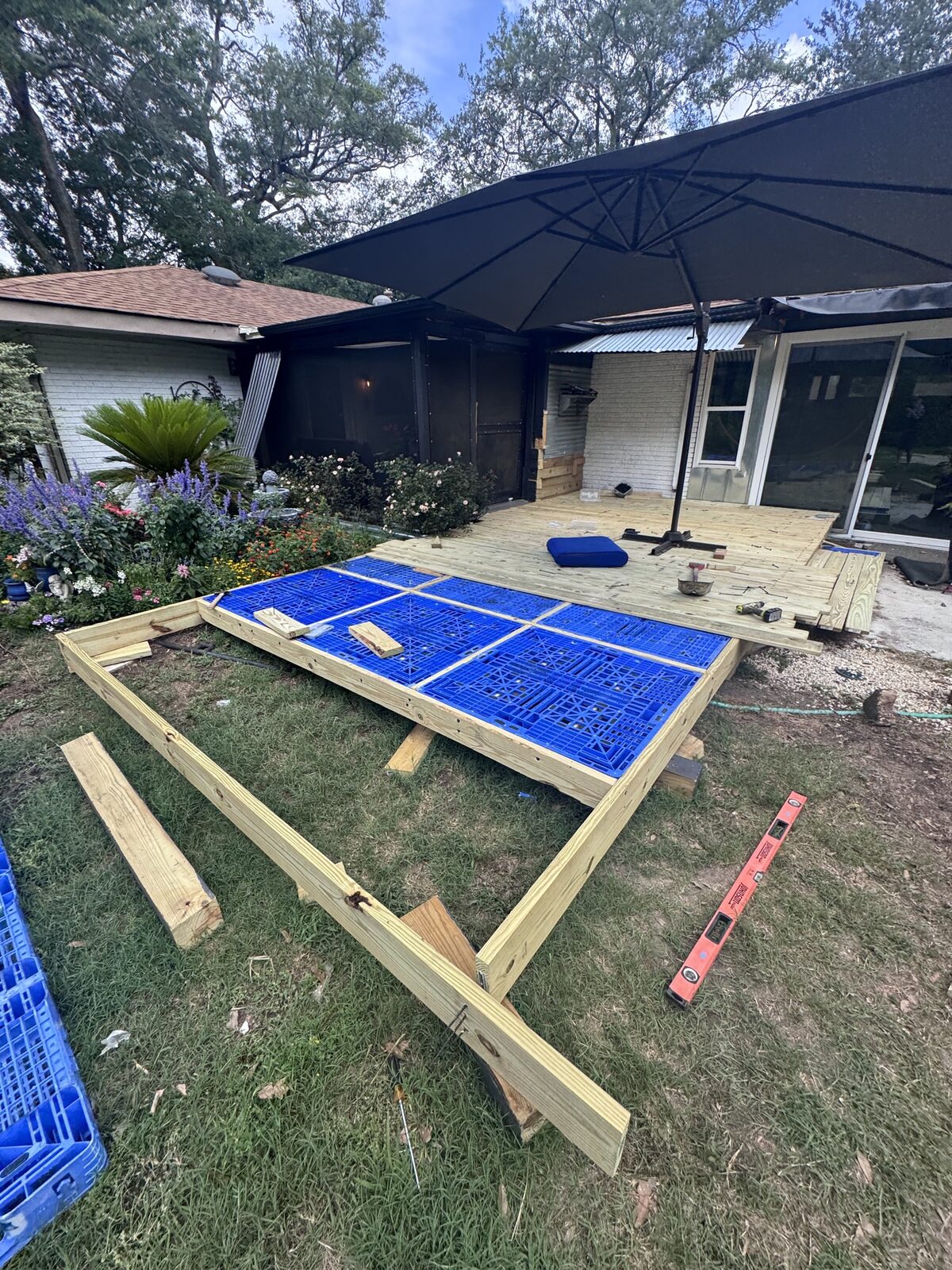
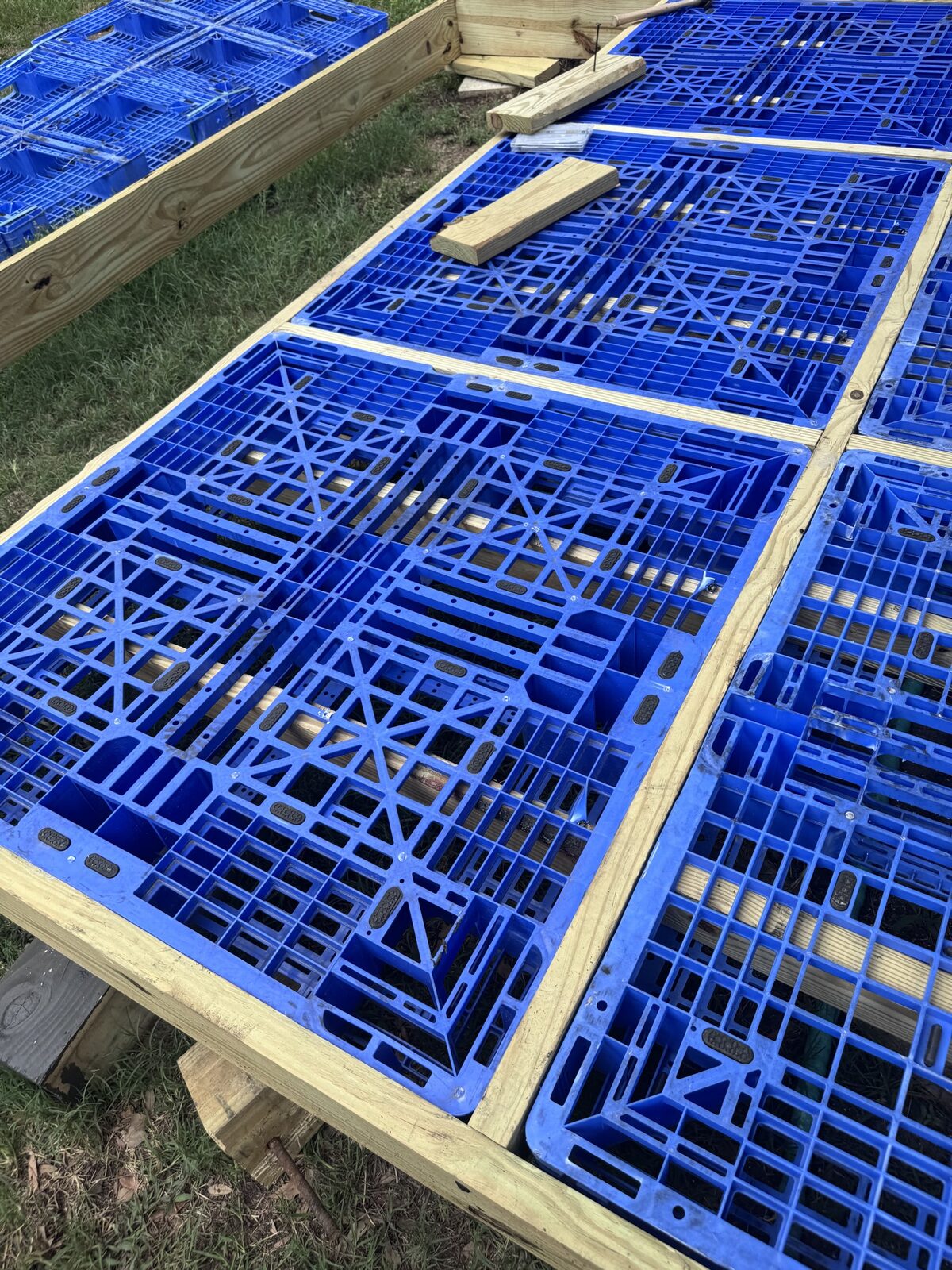
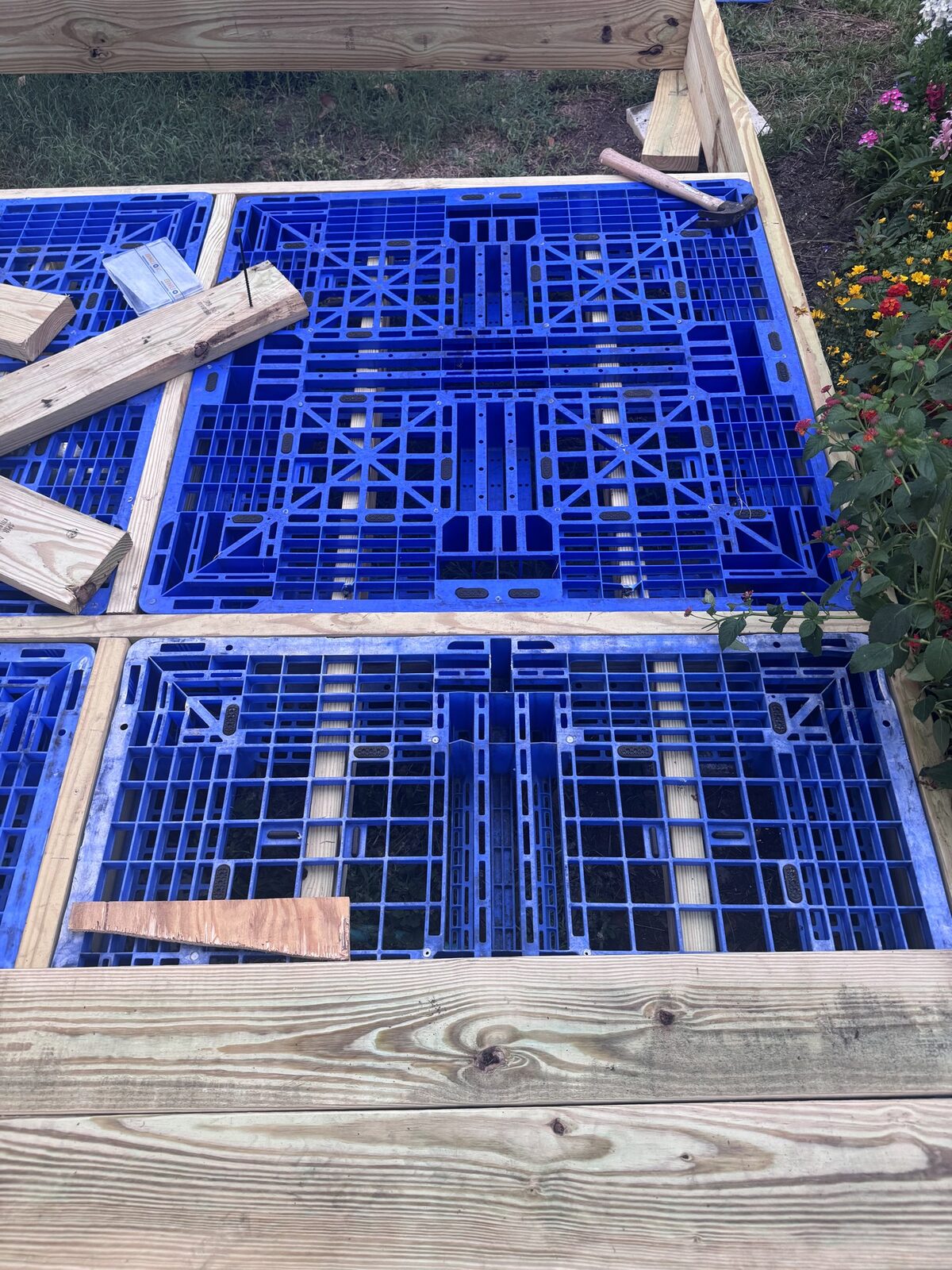
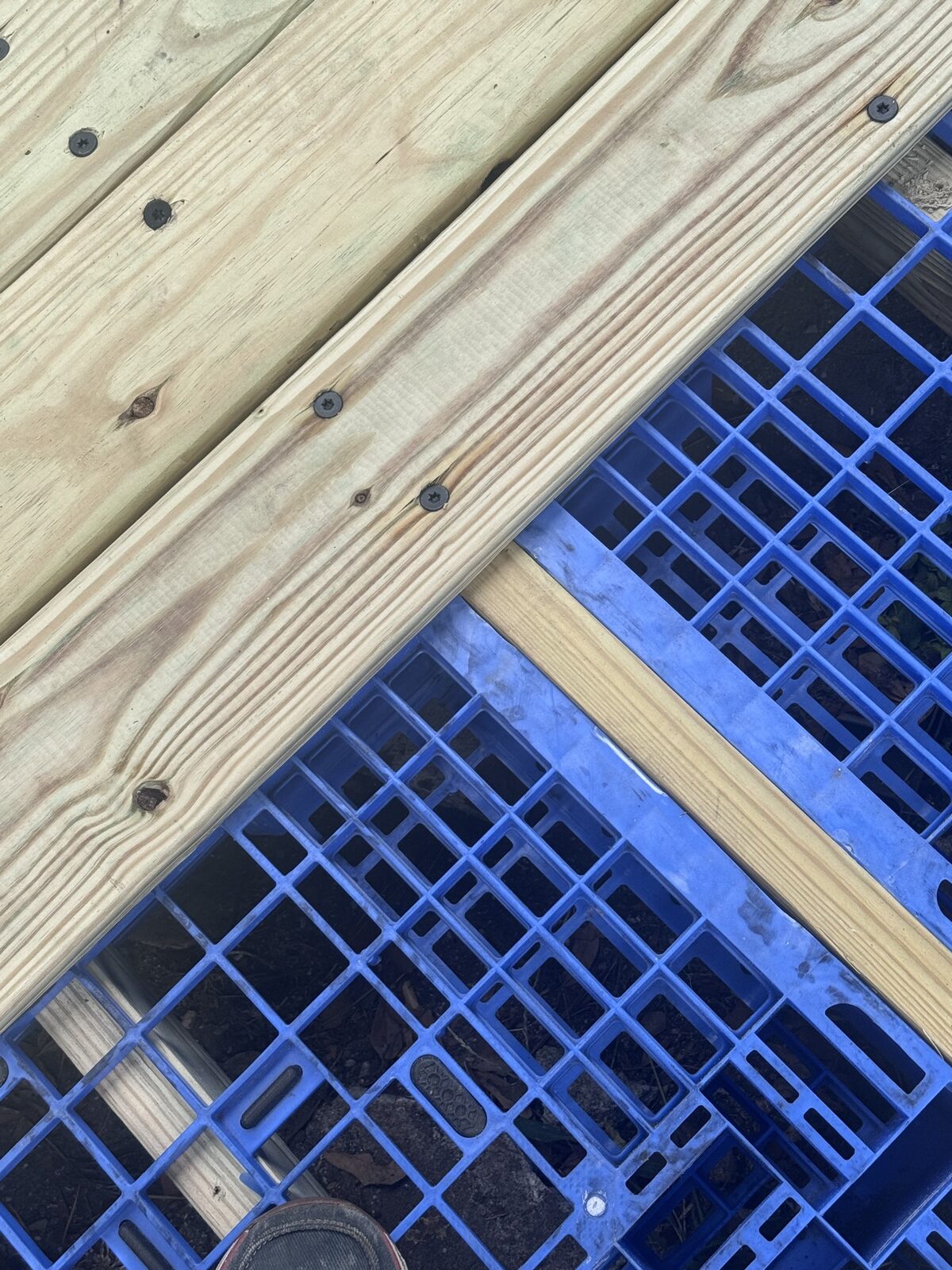
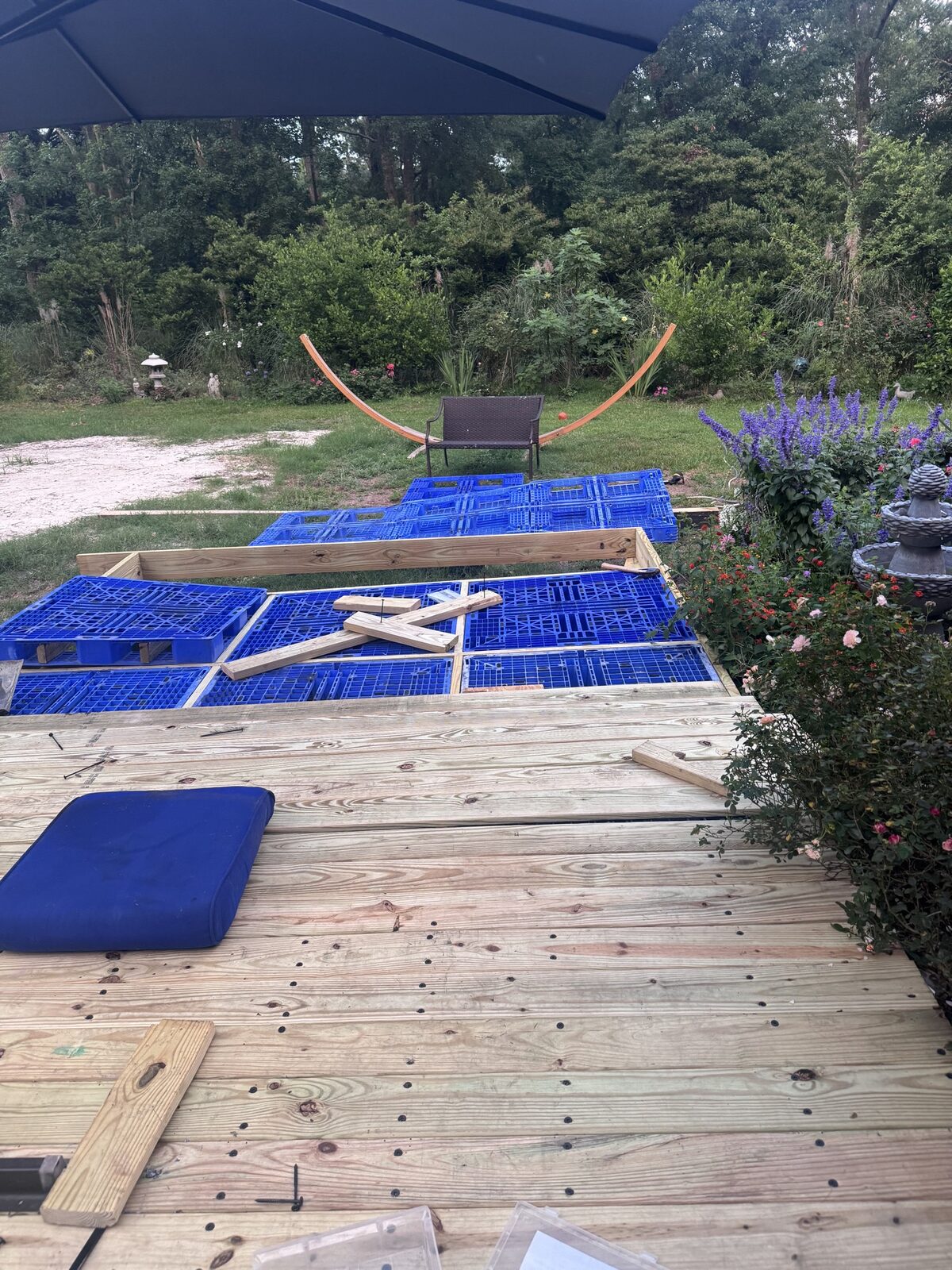
A 2x6 grid. One pallet per bay. A 2x4 cut to the pallet, slid through the forklift opening, screwed through the frame. Deck boards through the pallet top into that 2x4. The sandwich is the structure. It sits on dirt, on a concrete pad, or above grade on deck blocks at the frame intersections.
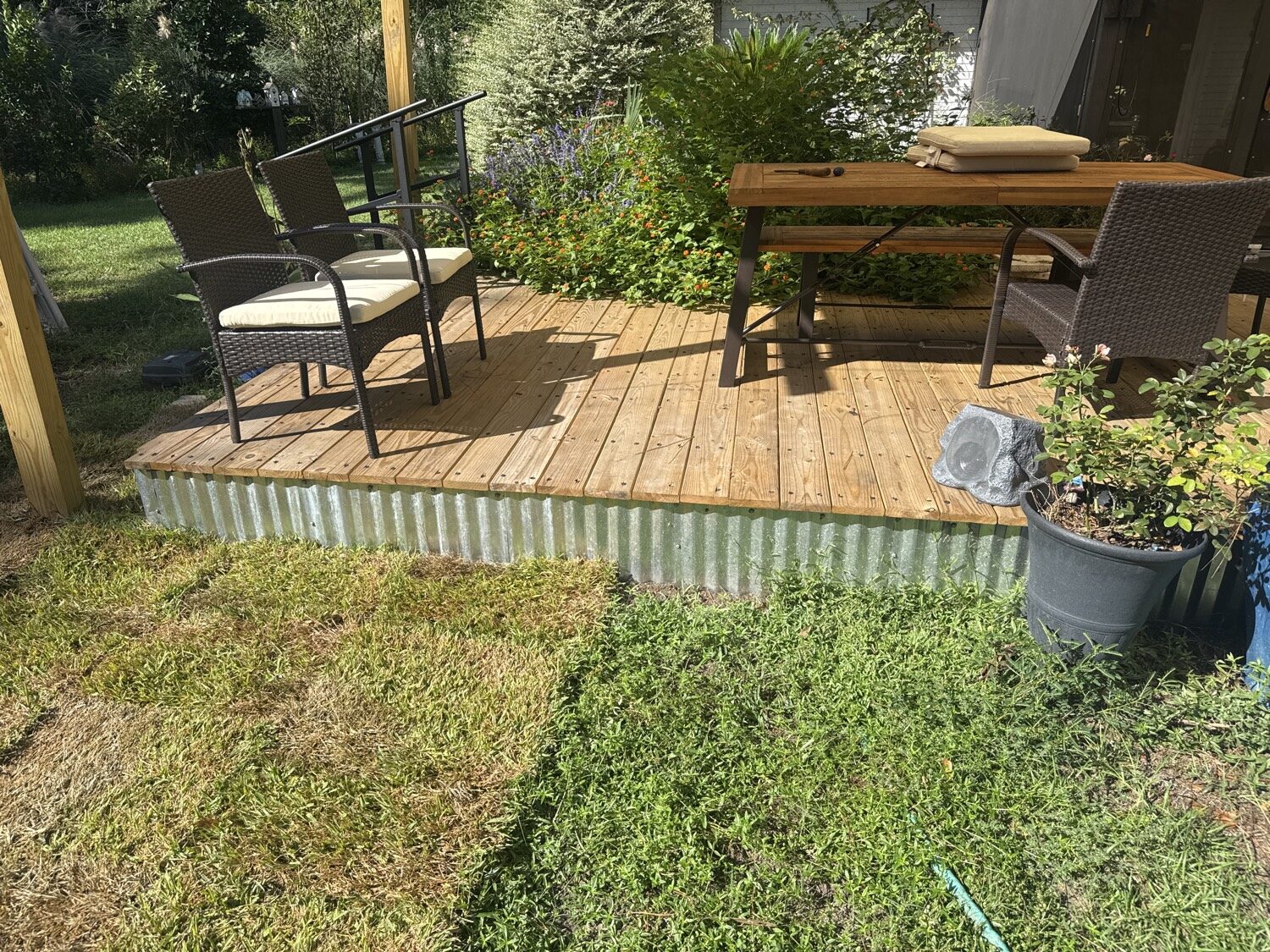
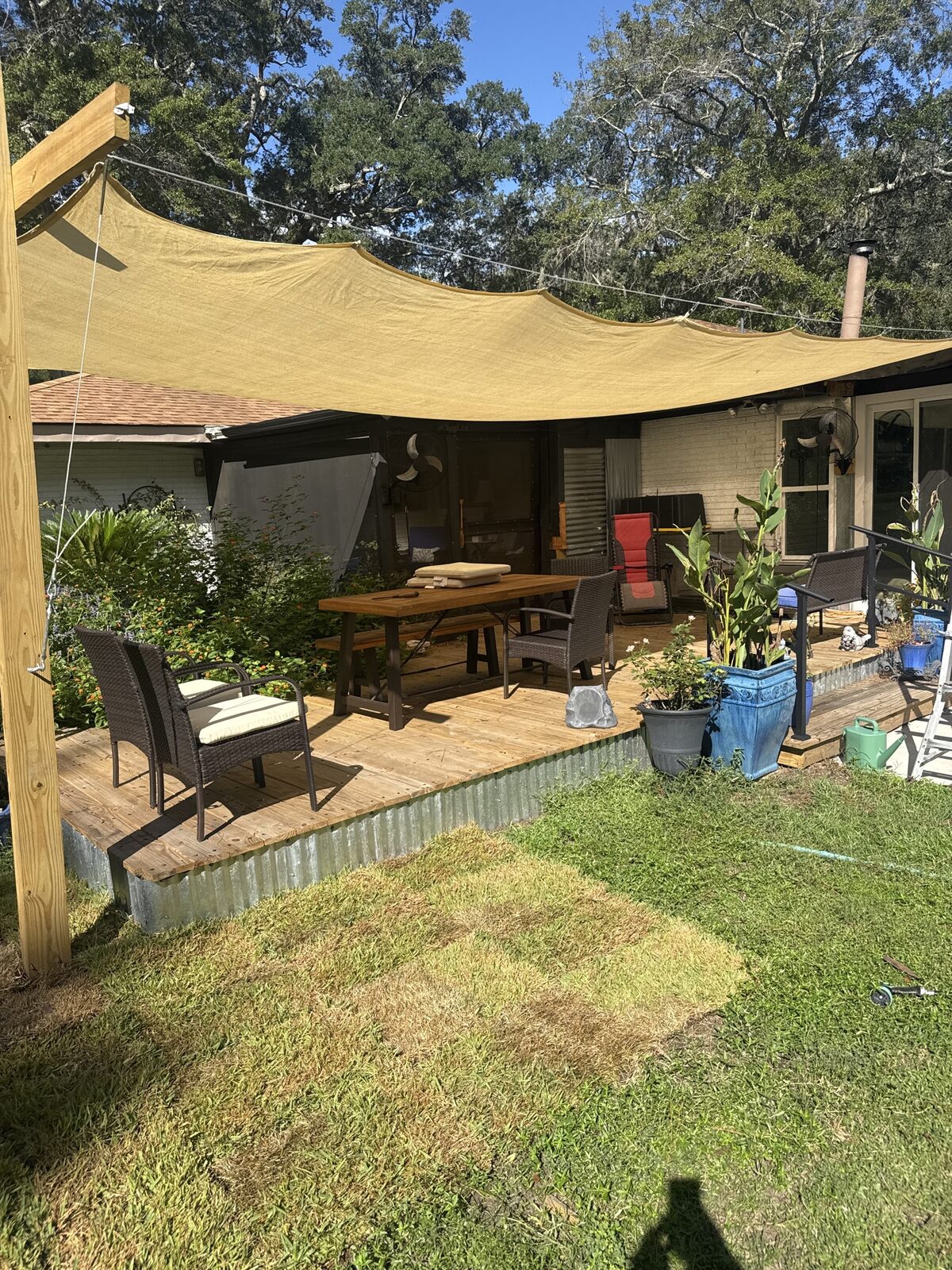
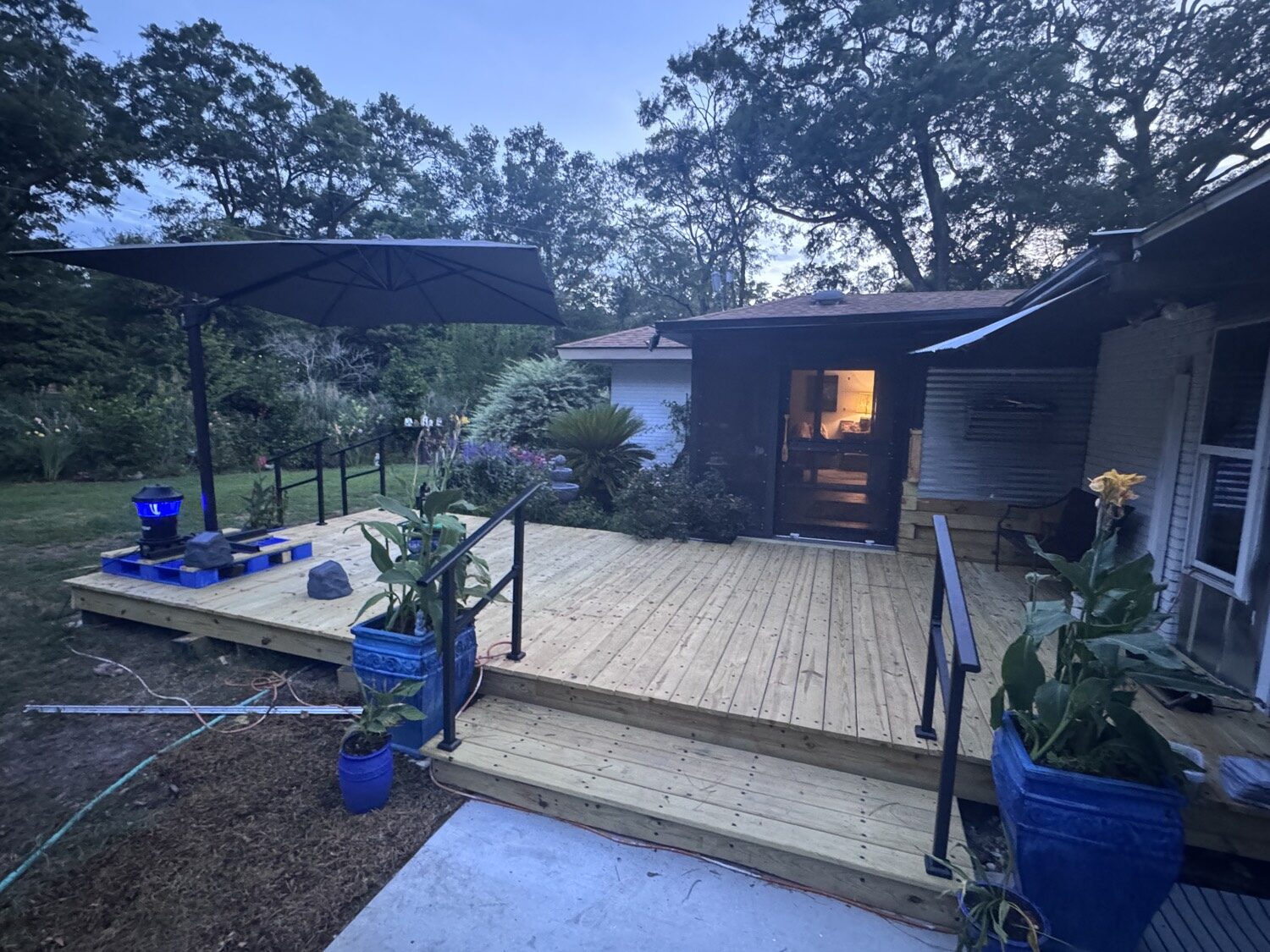
The joint Manus never got
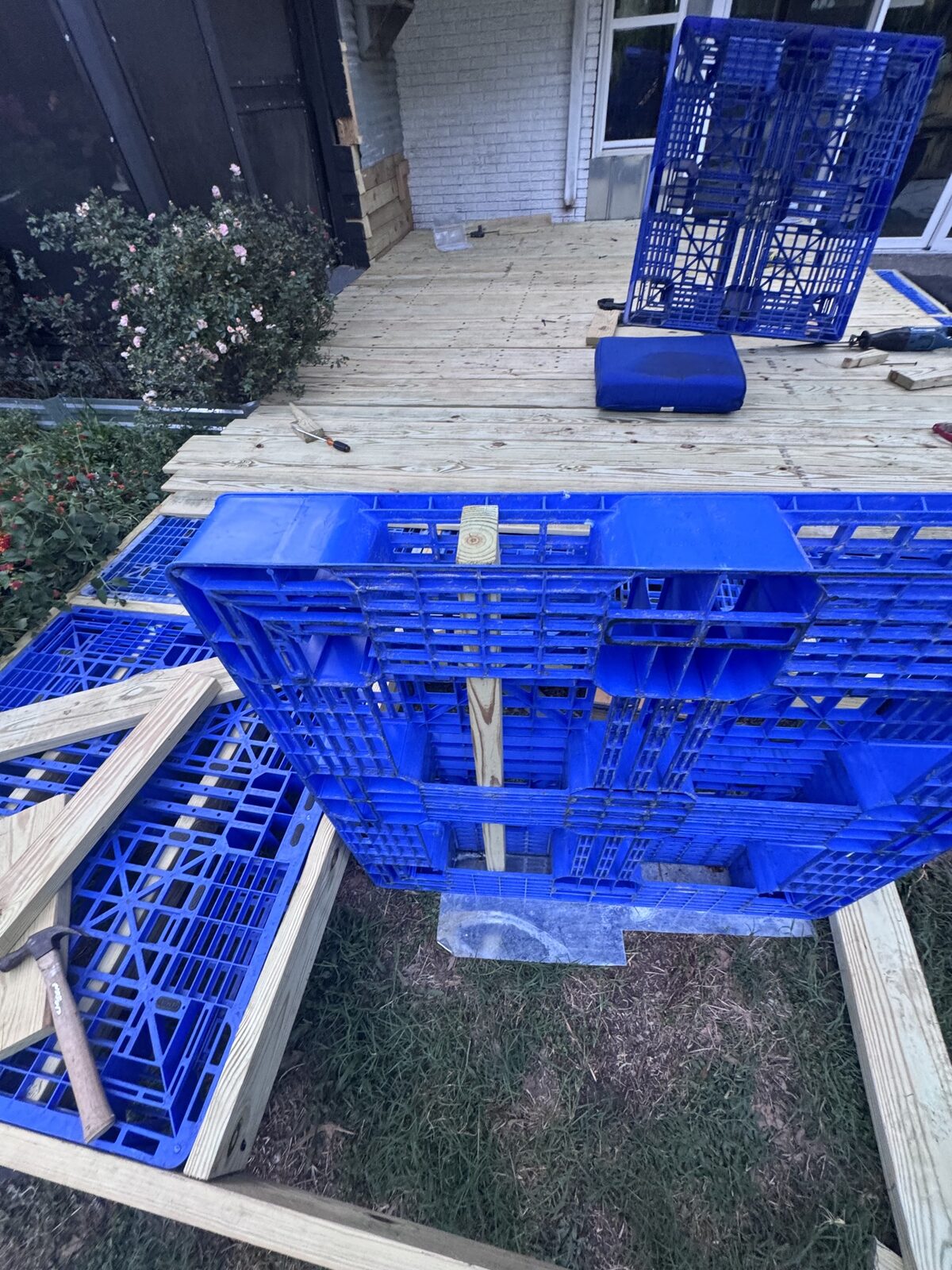
Every plastic shipping pallet already has a gap between its top deck and its bottom deck. That gap is where the forks of a forklift slide in. It is a standard industrial opening. A pressure-treated 2x4 is sized for it.
Cut the 2x4 to the exact width or length of the pallet — whichever way that opening runs. Flush with both sides. No tail hanging off. Screw through the 2x6 into the end of the 2x4.
Then the decking screw travels through three things: the board, the pallet top, the 2x4. That clamp is the structure. The pallet is the middle ply. You do not see the pallets. They are covered by the decking.
The build
Wooden pallets are out. They rot, they swell, and they do not have the molded opening this 2x4 is sized for. If the listing is wood, keep scrolling.
Not one empty picture frame. Each pallet sits in its own bay, surrounded on all four sides. Attachment is only at the 2x4-to-frame junction.
A molded pallet is already a rigid rectangle. Locked in a bay at the 2x4s, it keeps the 2x6 grid from racking. The boards close it into one deck.
Materials
Measure one pallet. Width, length, height. That module drives the grid, the 2x4 length, and how big the deck becomes. A 42×42, three by three, is about a 10.5×10.5 — not a 10×10 you force the pallets into.
If the pallet is rectangular, rotate it first. The 2x4 matches the side the forklift opening runs. Do not mix 42×42 and 45×59 in one frame.
Facebook Marketplace is the easy source. Search “plastic pallets.” Around Savannah, Jesup, Statesboro, and Riceboro they are typically $5–$10. Jesup sellers list 2,000+ at a time. Buy the grid style with the opening in the side. Skip nine-leg nestable cup pallets — the 2x4 has nothing to bear on.
One afternoon
Cut sheet
Enter the deck you want and the pallet you actually have. The grid, the 2x4s, and the blocks follow those two numbers. Plastic pallets only.
The paid guide
The site tells you what this is. The guide is what you print and take to the saw. Blank cut sheet, Marketplace notes, materials for a 3×3, the six steps, a weekend checklist, and the limits so you do not treat this like stamped drawings.
$19 one-time download
Swap this button for your Gumroad or Payhip link when the product is live. Until then the PDF is in the project folder: PALLET-DEX-Build-Guide.pdf
Freestanding only — on grade, on a pad, or on deck blocks at the grid crossings. Check your city before you add height, rails, stairs, or attach to the house.